
This just seems like I’m rambling, but really I’m not.
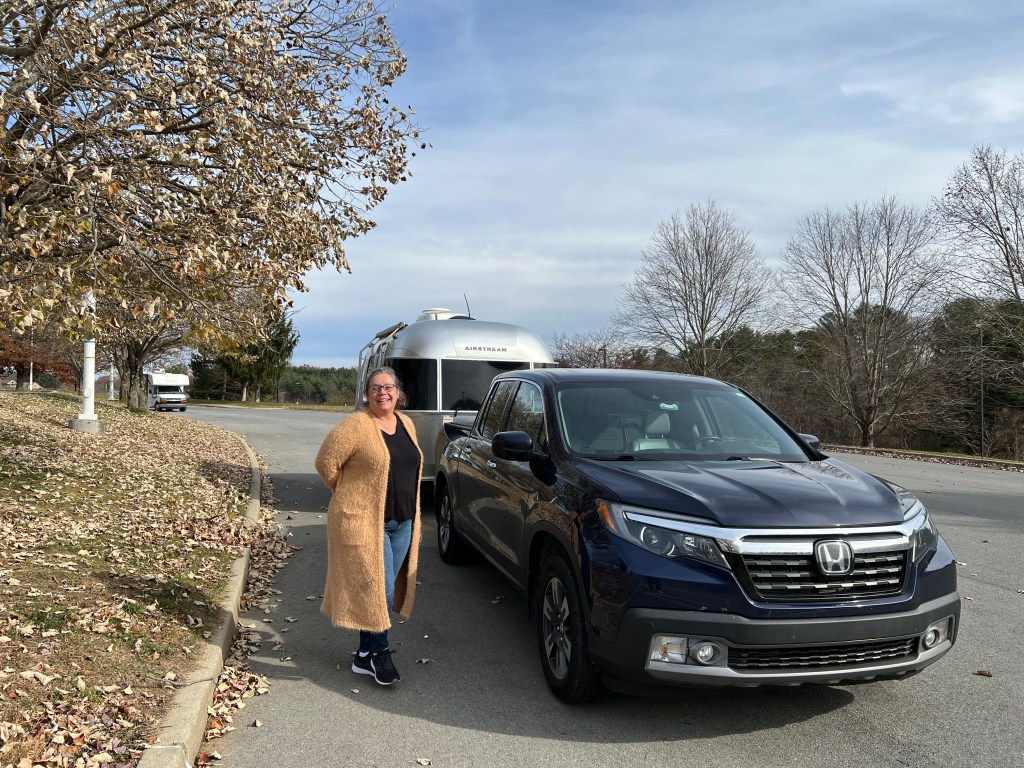
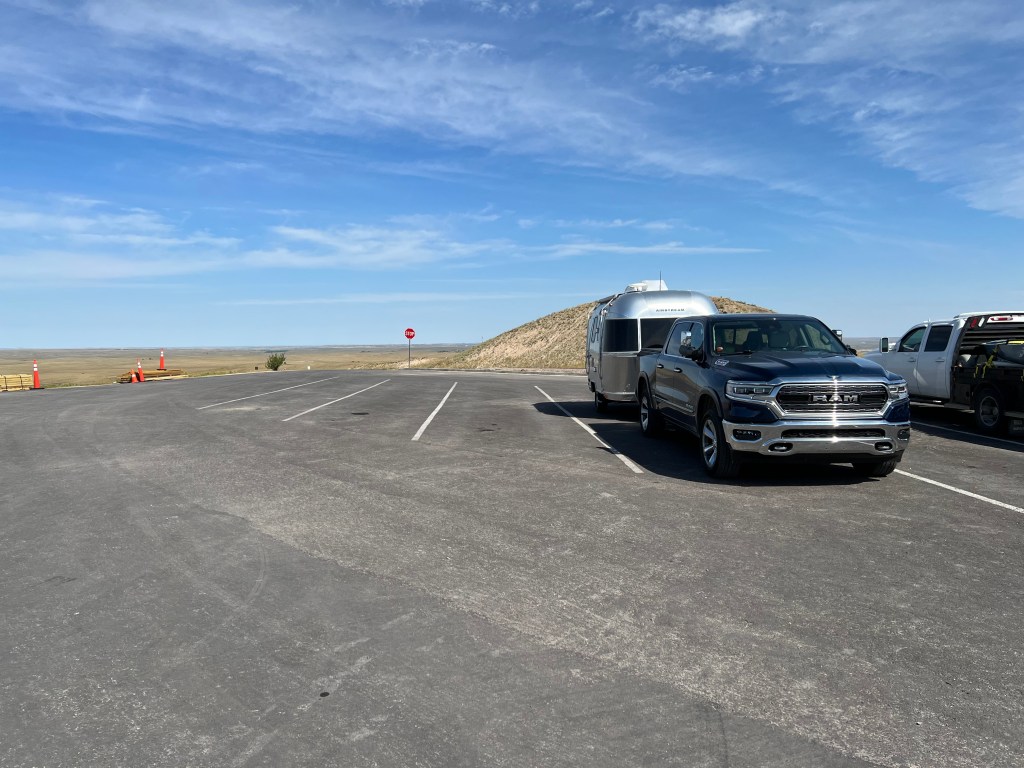
For those who are new to us, first of all welcome! We started doing some serious RVing when I decided to retire from working in August of 2022. Leading up to this time, we actually had bought a 2019 16RB Bambi Sport Airstream for our first major trip to Utah out to Las Vegas and then south through several National Parks (The southern portion did not happen — and I’ll get into why in a bit). We bought the Bambi, nicknamed Li’l Epsilon, in summer of 2021 a year out from this major trip, in order to break her in to our style of camping and to see what we liked and what we didn’t like. Our tow vehicle (TV) was a 2018 Honda Ridgeline. This truck was perfectly capable of towing that little airstream, but we learned it had very little margin and would sometimes overheat in hauling this little one. So, according to one dear friend, I bought a man’s truck as a solution to that — I purchased a 2022 Ram 1500 Limited Anniversary Edition. This truck was an EcoDiesel and I loved the thing inside and out. Too bad we fatally named it “The Blue Bomber” (of course, I’m an Air Force guy and this truck was painted Patriot Blue.)
During that trip, on the backside of a mountain pass leading into Silverthorne, CO, the Blue Bomber’s engine seized, and by some miracle, we made it to the side of the road safely. What kicked off from there was a seven week journey to having a new engine installed. Yes, it was covered by warranty, yes, I did consider pursuing lemon laws (it gave up the ghost at exactly 18,000 miles!). The new engine did perform well pulling our current 2022 Airstream Globetrotter 23FBT and we renamed it the Blue Phoenix, but we ended up finishing a shorter trip using a rented RAM Laramie (Hemi) before that fix took place. The Blue Phoenix was an awesome daily driver, but when towing it continued having difficulty over the years — the EGR valve failed, and at 82,000 miles the rear differential became a problem. In 2024, working with Airstream Nuts & Bolts (https://airstreamnutsandbolts.com) we added a significant update of solar, lithium battery suite, and under-the-carriage Onan Cummins generator. The spare tire was moved behind the two axles and the result was the hitch weight placed on the truck went from about 650 lbs to 850 lbs. The differential gave up immediately after that install and we cancelled yet another series of plans to get that fixed.
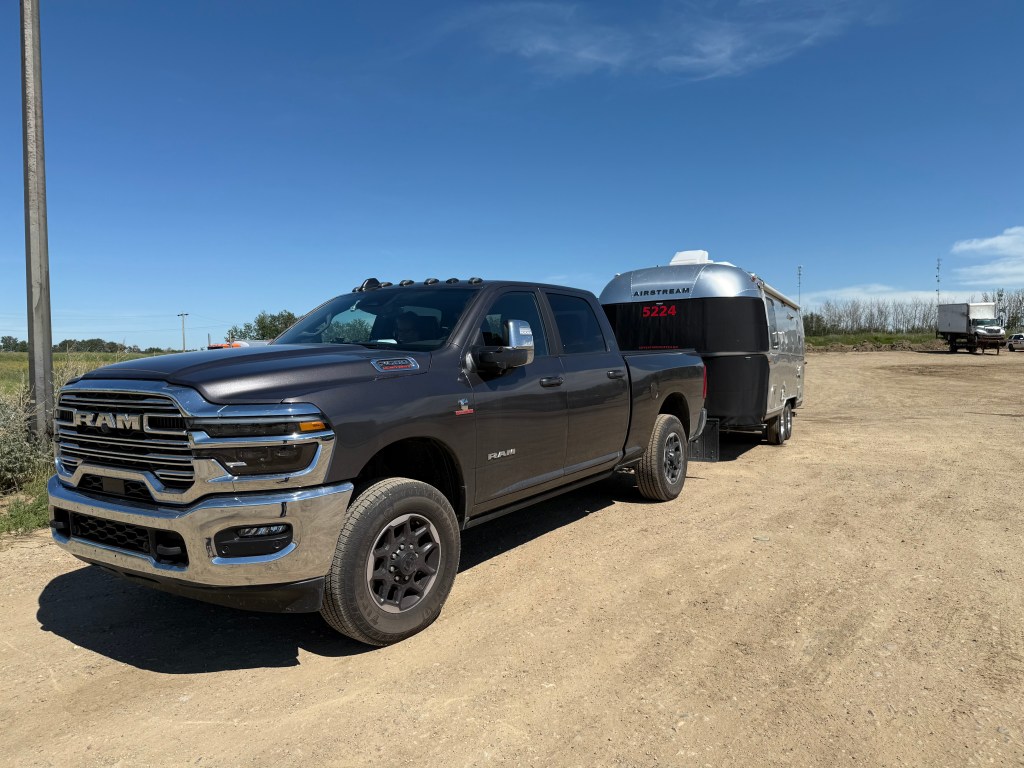
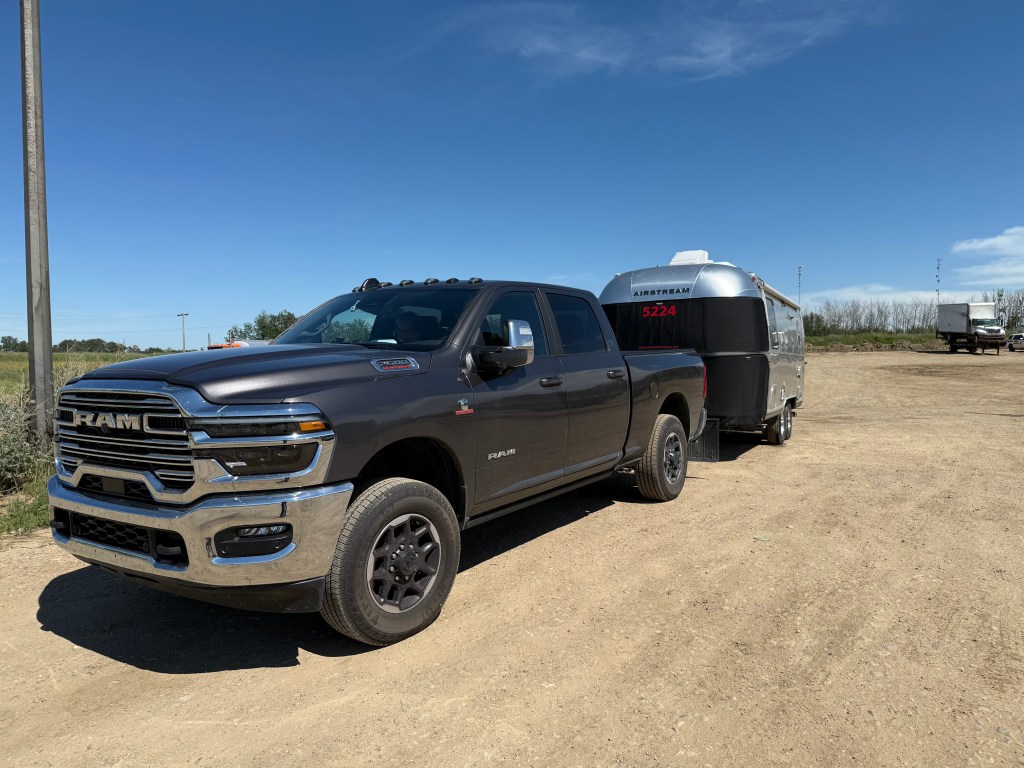
It was at this point I decided to go back through all of the calculations for safe towing and discovered the entire time we were towing with the Blue Phoenix, we were on the cusp of the 1290 lb cargo capacity. Now this I do not believe contributed to the unaccountable engine failure or the EGR valve issues, but certainly it contributed to the rear differential failure. While the truck had an 11,000 lb towing capacity, it did not have the cargo capacity to ensure a lasting differential or allow for a safety margin in towing. I decided then to go heavy duty on the next one (HD). I wanted safety margin, and I wanted it biggly! I still love the styling of RAM trucks. So, I test drove a 2024, read the reviews and decided to purchase a Cummins deisel version. But, as many of you know, the 2025 versions had been delayed, but the ability to order one had just opened up in December 2025. I custom ordered a 2025 Ram 2500 Laramie with the Cummins Diesel on 13 December and it arrived in mid March.
Let me tell you this thing is a beast. It is overkill for my needs and perfect for the safety margin I was looking for and so, we quickly nicknamed this very, very bad boy, Smaug. I got the airbags for the rear suspension, it came with a new designed High Output engine and a new 8 speed transmission that everyone was looking forward to. It definitely does the job and is a joy to drive for these purposes; however, this purchase is not without a hiccup. I wanted to have the oil changed and diesel fuel filter replaced before we left for our four month Alaska trip. Turns out, there are NO oil filters or fuel filters available yet. Now, I voiced my concern with the salesman who sold me the truck and spoke with the diesel mechanic. The latter assured me that even if I don’t get this done before returning after what will be ostensibly closing in on 20,000 miles before the fluid changes, that my truck will be OK. Should I trust that? Well, I have no choice, these parts are not available ANYWHERE right now. So, we’ll see if we can’t get this work done around the time we hit 15,000 miles, somewhere in Alaska, maybe Fairchild or Homer. What would you do?
I was also a little concerned when I purchased the truck, I could not get details on its cargo capacity. For such a truck, I thought it should be between 2500 and 3000 lbs. After all, it is able to tow up to 20,000 lbs and at a 10 to 15 percent hitch weight that would yield those numbers. Nope, the truck came in with an inexplicable cargo capacity for this trim level at 2170 lbs. I was saddened. But there was good news on the horizon for us. I just learned yesterday these trucks manufactured after May 2025 were being recertified as having cargo capacity of 2900 lbs (diesels only, Friends, sorry). Absolutely no physical changes in production; it’s all a certification process. This means that Smaug indeed has an approximate 2900 lb cargo capacity and I’m thrilled. It is a wonderful truck!
Exploring Jasper tomorrow. God Bless!
Let me know your thoughts in the comments below.
 Epsilon Adventures
Leave a comment